
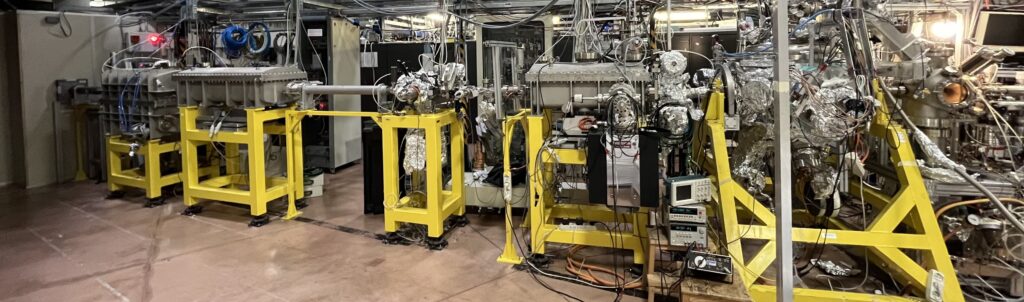
The BEAR beamline of CNR-IOM at Elettra
Research activities
Organic Thin Films and Interfaces
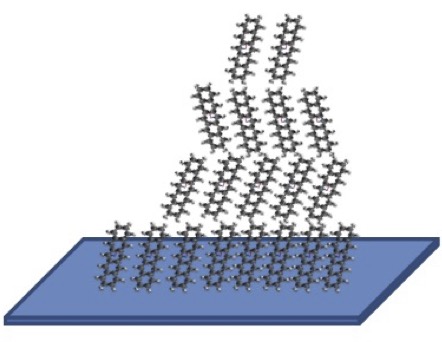
Growth (by thermal evaporation in vacuum or wet chemistry) and characterization (by optical and electron spectroscopies, also exploiting synchrotron radiation) of organic molecular films at surfaces for applications in molecular electronics, i.e. organic thin film transistors (OTFT), organic light emitting devices (OLED), organic light emitting transistors (OLET), sensors and photovoltaics. Films are characterized at nano- and micro-scale through UPS, XPS, dichroic XAS and reflectivity, Vis-UV absorption and reflectivity and atomic force microscopies are also routinely applied. Particular emphasis is given to the study of interface formation, molecular orientation, film morphology, composition and reactivity.
Inorganic Thin Films and Interfaces
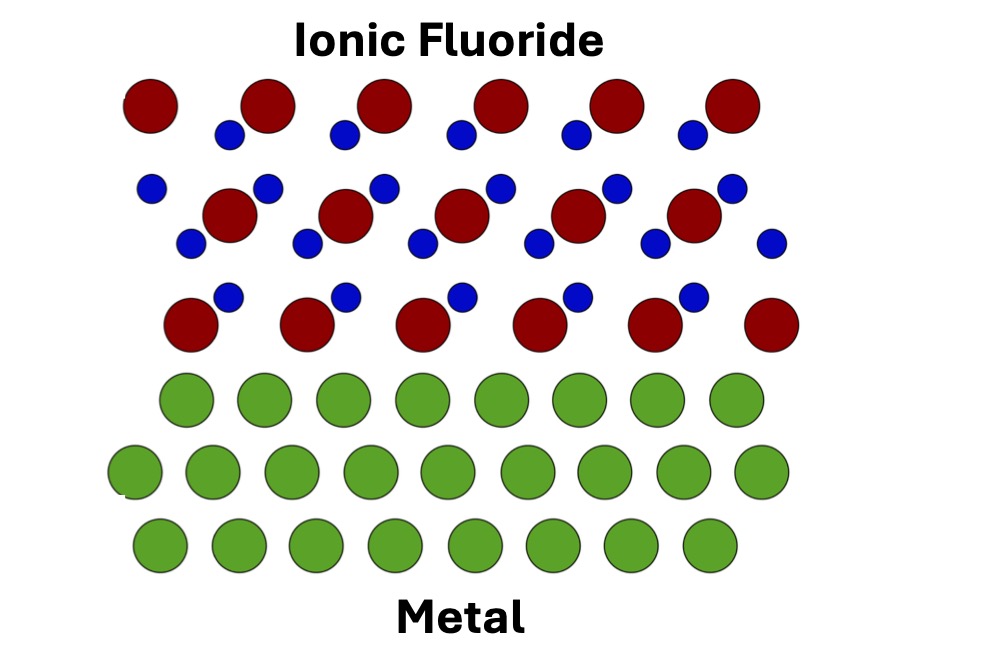
Growth in ultra-high-vacuum (UHV) by Molecular Beam Epitaxy (MBE) and characterization of nano-structured surfaces and interfaces on semiconductors, insulators and metals, with attention to the physico-chemical and structural properties of the film and at the buried interface. Typical systems that are investigated include metal-semiconductors (i.e. rare earths on semiconductors) and dielectric-semiconductor and dielectric-conductor interfaces (ionic fluorides and oxides on semiconductors and metals), magnetic ultra-thin layers; transition metal dichalcogenides and 2D materials, chemisorption at surfaces (for catalysis). Investigation techniques include XPS, UPS, Vis-UV-soft-X ray reflectivity and absorption, electron diffraction (LEED and RHEED), atomic force microscopy (AFM)
X-ray absorption and reflectivity from the visible to the soft-X ray range
Optical absorption and reflectivity in a wide energy range: from the visible light to the soft-X, exploiting synchrotron radiation. NEXAFS at the K edge of light elements (C, N, O, F) and L2,3 edges of 3d elements for the investigation of local geometry, molecular orientation and electronic properties, including magnetic ones. Expertise in the investigation of organic materials and line-shape interpretation in terms of simulations from the first principles.
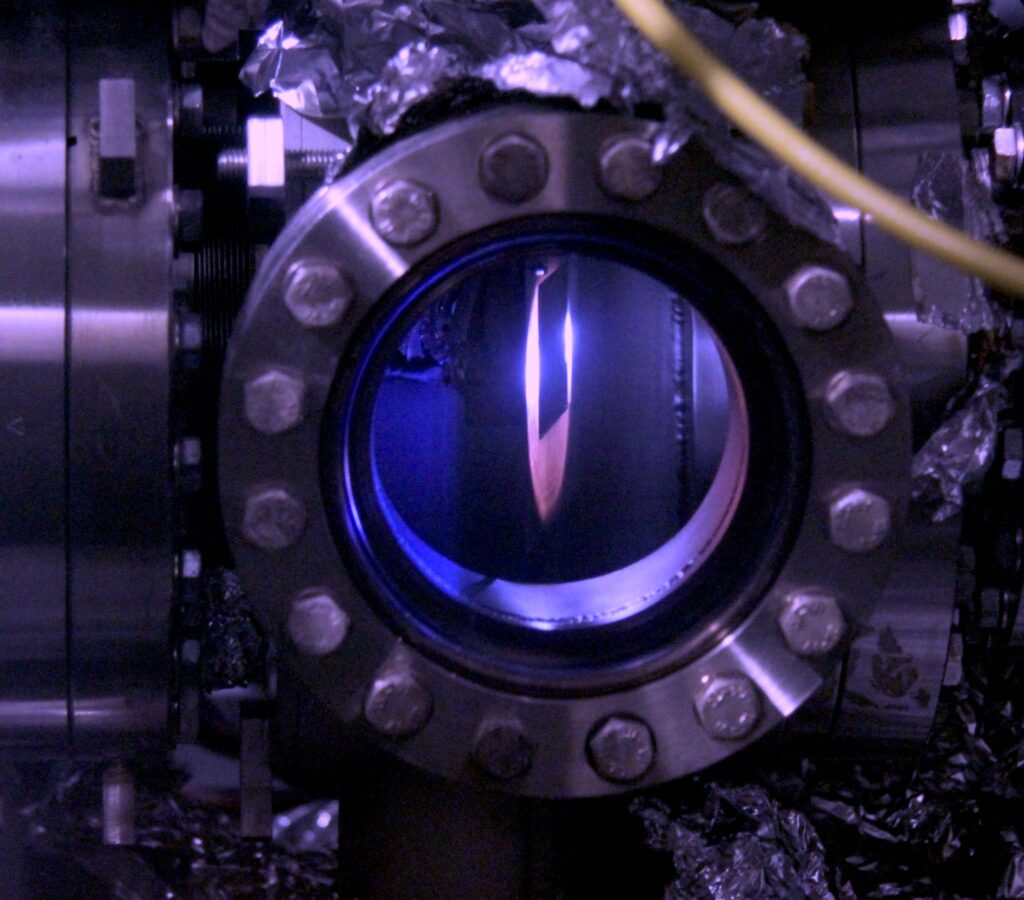
Soft X-ray Reflectivity of Anisotropic Layered Materials
Development of protocols for the interpretation of the reflectivity lineshape form Vis to soft-X rays based on the theoretical prediction of the absorption cross section and the simulation of the propagation of the electromagnetic field in anisotropic layered materials. Application to isotropic and anisotropic thin films.
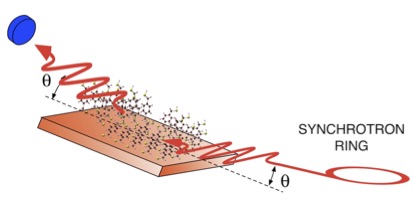
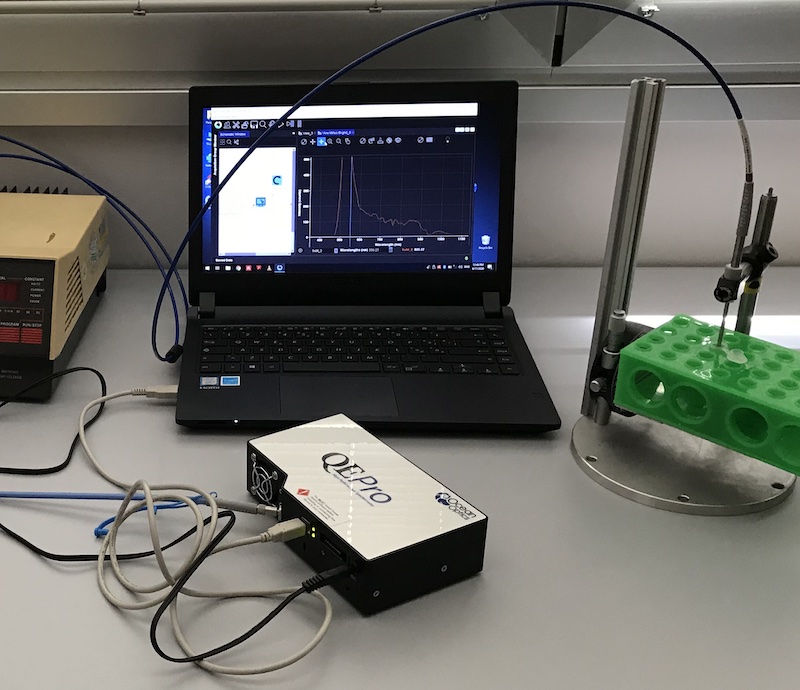
Optical Luminescence of Biological Materials
Investigation and interpretation of the luminescence generated by biological chromophores. Study of the luminescence yield and lineshape as a function of the excitation wavelength.